Matatu Metropolis

Photos (10)

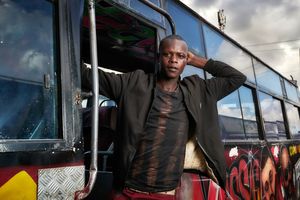
Collins Birage (25) is a Makanga, a conductor of a Matatu. He works in one of the hundreds of Matatus which are every day lining up while waiting for passangers in front of the Nairobi Railways Bus Station. Collins' goal is to get as many passengers as possible on his bus as quickly as possible. The more passengers the Makangas recruit, the more they earn.
File: Matatu_Metropolis_02.JPG
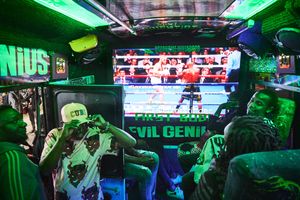
On the LED screens in the Mastermind-Matatu boxing fights are shown while the bus waits for passangers at Tom Mboya Street in Nairobi. Like many matatus, the bus is equipped with colored interior lighting, LED screens and Wifi on board in order entertain the passengers.
File: Matatu_Metropolis_04.JPG
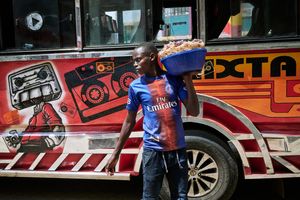
A street vendor in Rongai offers the ppassengers of the Mixtape Matatu peanuts for sale. The Nyangas, as the flashy matatus are called, are decorated with artistic Graffitis, and pimped with spoilers and extensions, crazy interior designs and on board entertainment. The numerous matatus create many jobs in Nairobi. One Matatu, they say, feeds about ten people on average.
File: Matatu_Metropolis_07.JPG
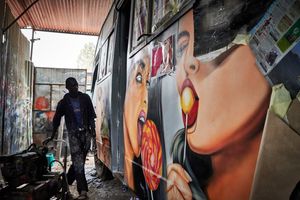
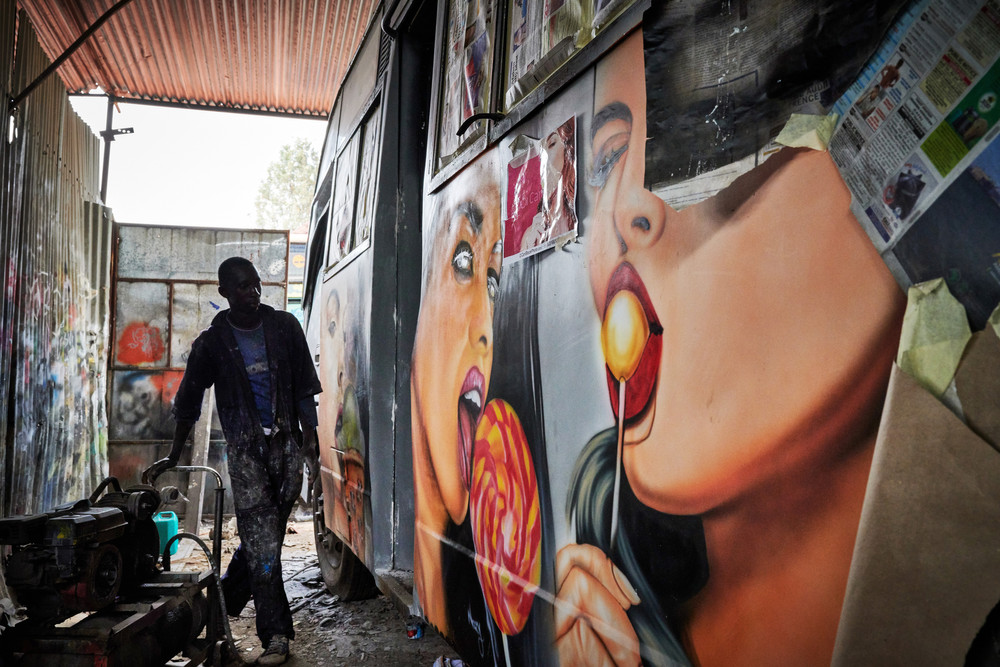
In the Buru Buru Phase 1 district of Nairobi, craftsmen are pimping matatus in a garage. The matatus in Nairobi are very numerous and must always be decorated with new themed motifs in order to stand out from the competition and remain attractive to passengers.
File: Matatu_Metropolis_06.JPG
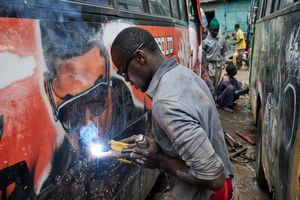
In the Enlight garage in the Buru Buru Phase 1 district of Nairobi, a welder improves the exterior of an older Matatus, which gets newly prepped up and sprayed with graffitis. The cost of pimping an old bus can be up to 1.5 million Kenyan Shillings, around 15,000 US Dollars.
File: Matatu_Metropolis_05.JPG
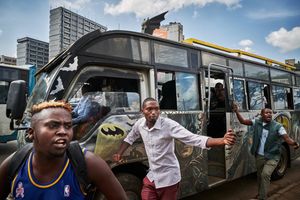
Makangas of a Matatu, which is dedicated to the superhero Batman, advertise passengers in the roundabout of the Railway Bus Station. The main task of the Makangas, apart from collecting money, is to recruit passengers. The job is tough. The Makangas work long hours running around and don‘t sleep much.
File: Matatu_Metropolis_01.JPG
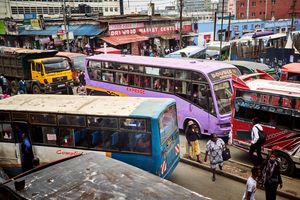
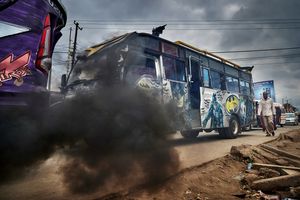
In the Central Business District, matatus play a significant role in bringing traffic in the center of Nairobi to an almost complete standstill several times a day. The matatu business has developed into a huge industry that is estimated to generate annual sales of two billion U.S. dollars and employs up to 350,000 people.
File: Matatu_Metropolis_08.JPG
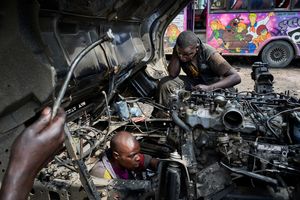
Nairobi, September 27, 2019. Mechanics in a garage in Buru Buru Phase 1 fix the engine of a Matatu, while Scooby Doo & Co. seem to watch them with a certain surprise and astonishment. . The mechanics earn about 150 USD a month, which is about ten percent of the average monthly profit which an owner usually makes with one Matatu after paying all expenses including the bribes for the traffic police.
File: Matatu_Metropolis_09.JPG
The buses which commute between Nairobi and the suburb Rongai are known for its Nganyas, as the most spectacularly pimped Matatus are called. This Matatu here is dedicated to Batman, the interior is inspired by Batman‘s cave. One could call Nairobi with its modern skyscrapers and the exhaust clouds the Gottham of Africa – IIn former times the city was nicknamed „Nairobbery“.
File: Matatu_Metropolis_10.JPG
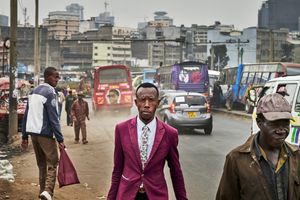
Residents of Nairobi return home from work in the evening. Colourful competitiveness and the thrive for progress seem to part of the DNA of Nairobiës inhabitants. Techies and reformers are working on digitalising the fares for Matatus and on electrifying their engines. Perhaps soon electric-buses will be whizzing through Nairobi, making the colourful Matatus more eco-friendly in the future.
File: Matatu_Metropolis_10.JPG